
Maths
INTENT
At Holbeton Primary School, we want our children to become fluent in the fundamentals of Mathematics, to be able to reason and to solve problems. We have adopted the curriculum from White Rose Maths to achieve this. Our Intent, Implementation and Impact statements draw heavily from the White Rose Materials.
The Curriculum from White Rose Maths embraces the National Curriculum aims and supports the children to become:
- Visualisers: We use the Concrete, Pictorial, Abstract (CPA) approach to help pupils understand mathematics and to make connections between different representations.
- Describers: We place great emphasis on mathematical language and questioning so pupil scan discuss the mathematics they are doing, and support them to take ideas further.
- Experimenters: As well as being fluent mathematicians we want pupils to love and learn more about mathematics.
The intent of the White Rose Curriculum is to provide an ambitious, connected curriculum accessible for all pupils in school from Reception to the end of Year 13. At Holbeton, we use White Rose as our central core from Reception to the end of Year 6.
IMPLEMENTATION
White Rose is structured to ensure that children learn effectively through the concept that some aspects need to be learned before others are tackled. For example: Place Value needs to be understood before working with addition and subtraction, addition needs to be learnt before looking at multiplication (as a model of repeated addition). White Rose Maths places an emphasis on number skills first, carefully ordered throughout the curriculum. Some topics are not as critical, e.g. Shape and Statistics. which do not require number to be covered first.
We deliver the maths curriculum through mixed-age teaching in Year 5 and 6 and through a carousel model in Reception through to Year 4.
Each year, the first unit is on understanding Place Value, followed by essential calculation skills that children need to succeed in Maths. This firm grounding gives children confidence and helps them to access the rest of the Maths curriculum.
The White Rose Progression documents (below) detail how topics / strands progress as children move through school.
Mathematical concepts or skills are mastered when a child can show it in multiple ways, using the mathematical language to explain their ideas, and can independently apply the concept to new problems in unfamiliar situations.
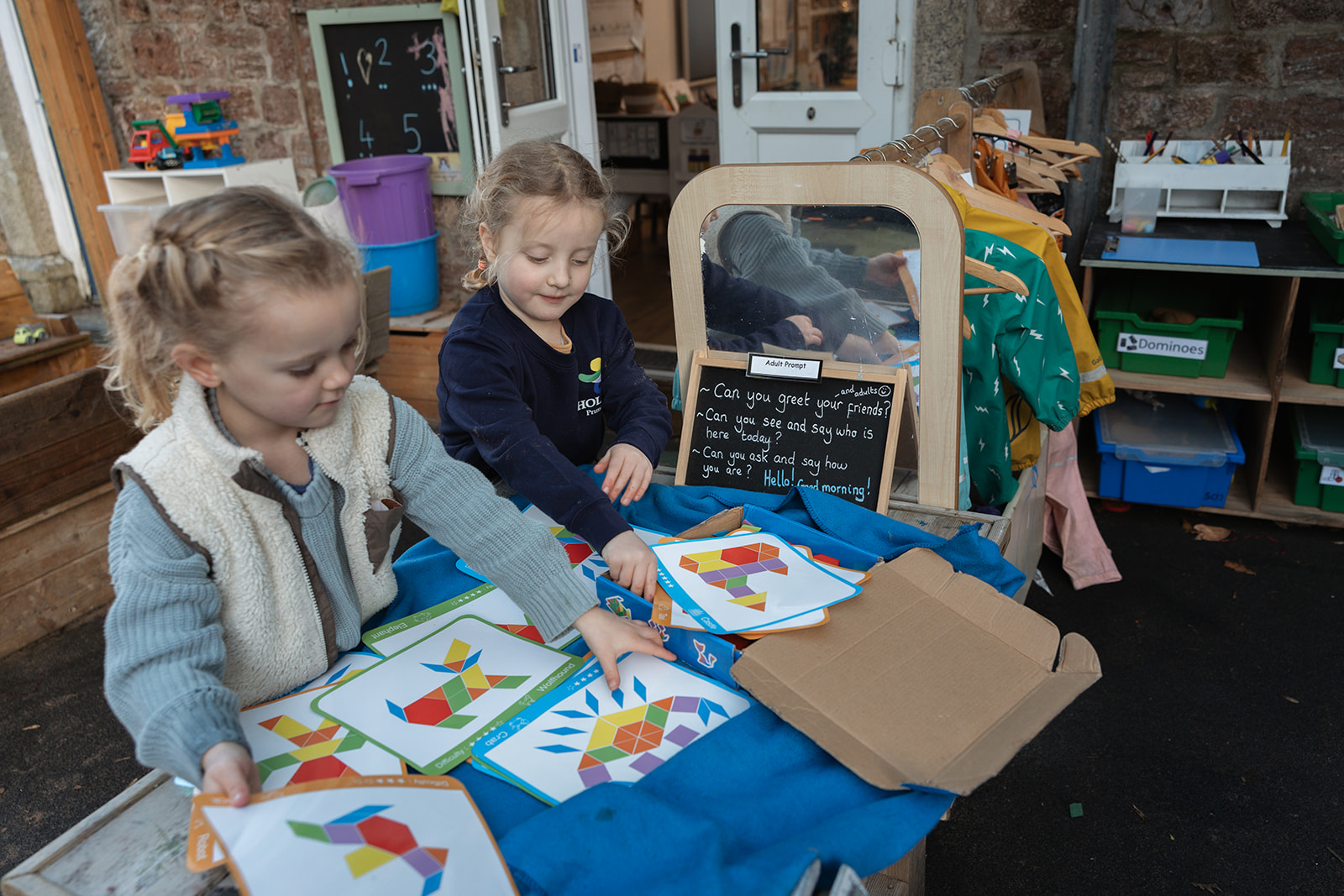
Teachers plan a range of opportunities to use Maths inside and outside the classroom, ensuring that our teaching and learning opportunities are inclusive and can be accessed by all of our children. To ensure inclusivity, a number of approaches are used to adapt the curriculum. Some examples include; scaffolding, use of manipulatives to support learning, re-phrasing or representing a question or problem differently. Support and adaptations are tailored to the individual needs of the child.
Every half-term we assess the progress our children are making through a range of assessment strategies. These include White Rose Maths end of unit assessments, WR end of term, and arithmetic and reasoning assessments for Year 2 and Year 6 children. The information gathered through day-to-day teaching and more formal assessments is used to inform our next steps for teaching, to determine any gaps in learning and identify any misconceptions that children may have.
At the end of each year we expect the children to have achieved the 'Age Related Expectations' (ARE) for their year group. Some children will have progressed further and will be working at 'Greater Depth'. Children who have made less than the expected rate of progress will receive additional support, through small group work, pre-learning and through interventions.
IMPACT
Through discussion and feedback, children talk enthusiastically about their maths lessons and how they love learning about maths. They can articulate the context in which Maths is being taught and relate this to real life purposes. Children show confidence and believe they can learn about a new maths area and apply the skills and knowledge they already have.
Pupils know how and why Maths is used in the outside world and in the workplace. They know about different ways that maths can be used to support their future potential.
Children show a high level of pride in the presentation and understanding of the work and have the chance to develop the ability to recognise relationships and make connections in Maths lessons.